UPDATE: Performance Dashboards is now available in an updated second edition. Check out my review here.
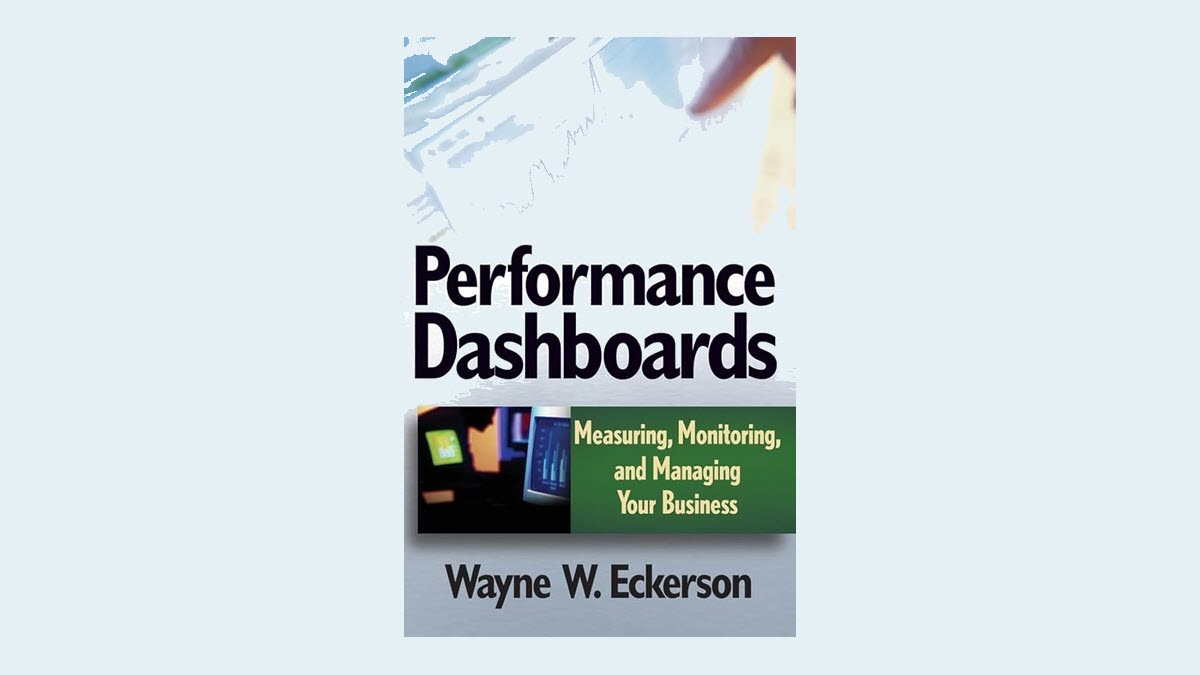
Wayne Eckerson is a researcher with The Data Warehousing Institute. He’s created a great book, Performance Dashboards (Wiley, 2005, 978-0471724179), to address the current trendiness of performance management and enterprise dashboards. Eckerson takes a vendor-neutral stance and supports his assertions both with research and case studies.
The book provides a comprehensive view of performance dashboards and their role in the organization. What I found particularly illuminating were two “big-idea” concepts that alone are worth the price of the book.
The first big idea is Eckerson’s definition of a performance dashboard. While business and IT management may be inclined to define a performance dashboard as merely a high-level representation of Key Performance Indicators (KPI’s), Eckerson describes a robust three-tier architecture. Using his definition, what is commonly known as the “dashboard” is only the tip of the iceberg. Wayne defines three categories of performance dashboards- operational, tactical, and strategic- each having a tiered three-layer architecture.
The second big idea is is contained in Chapters 4 and 5. Chapter 4 is entitled “Assessing Your Organizational Readiness” and defines criteria that an organization can use to assess their readiness to adopt performance dashboards. Chapter 5 is entitled “Assessing Your Technical Readiness” and presents a Business Intelligence Maturity Model. While “organizational readiness” addresses the entire organization, the “Business Intelligence Maturity Model” specifically addresses the IT organization’s current position on the BIMM scale.
The book can either be read cover-to-cover or by choosing specific topics. As such, it can be a valuable read for IT professionals at all levels as well as business users, managers and executives. My hunch is that readers will be delighted with the new insights they glean, but frustrated with their ability to bring higher business intelligence and change to their organizations. Perhaps the book can provide a common reference so organizations can establish consensus and move forward.
Disclosure of Material Connection: I purchased this book with my own funds. It was not a free review copy. I was not required to write a positive review. The opinions I have expressed are my own. Some of the links in the post above are “affiliate links.” This means if you click on the link and purchase the item, I will receive an affiliate commission. Regardless, I only recommend products or services I use personally and believe will add value to my readers. I am disclosing this in accordance with the Federal Trade Commission’s 16 CFR, Part 255: “Guides Concerning the Use of Endorsements and Testimonials in Advertising.”
I am an analytics and cloud architect, author, and trainer. An Azure-certified blogger, SAP Mentor Alumni and co-author of the SAP Press book SAP BusinessObjects Web Intelligence: The Comprehensive Guide, I prefer piano keyboards over computer keyboards when not blogging or tweeting.
SAP Lumira, Discovery Edition: The Comprehensive Guide from SAP Press will help get you creating engaging data stories quickly, whether you are a first-time Lumira user or upgrading from a previous version.
Used to monitor number of Google Analytics server requests
10 minutes
__utmb
Used to distinguish new sessions and visits. This cookie is set when the GA.js javascript library is loaded and there is no existing __utmb cookie. The cookie is updated every time data is sent to the Google Analytics server.
30 minutes after last activity
__utmc
Used only with old Urchin versions of Google Analytics and not with GA.js. Was used to distinguish between new sessions and visits at the end of a session.
End of session (browser)
__utmz
Contains information about the traffic source or campaign that directed user to the website. The cookie is set when the GA.js javascript is loaded and updated when data is sent to the Google Anaytics server
6 months after last activity
__utmv
Contains custom information set by the web developer via the _setCustomVar method in Google Analytics. This cookie is updated every time new data is sent to the Google Analytics server.
2 years after last activity
__utmx
Used to determine whether a user is included in an A / B or Multivariate test.
18 months
_ga
ID used to identify users
2 years
_gali
Used by Google Analytics to determine which links on a page are being clicked
30 seconds
_ga_
ID used to identify users
2 years
_gid
ID used to identify users for 24 hours after last activity
24 hours
_gat
Used to monitor number of Google Analytics server requests when using Google Tag Manager
1 minute
_gac_
Contains information related to marketing campaigns of the user. These are shared with Google AdWords / Google Ads when the Google Ads and Google Analytics accounts are linked together.



One thought on “Performance Dashboards by Wayne Eckerson”